Here's what's in your latest issue of 24/7
Thank you so much for supporting Samaritans
It means everything that you’re with us to prevent suicide today. Because tomorrow could be too late.
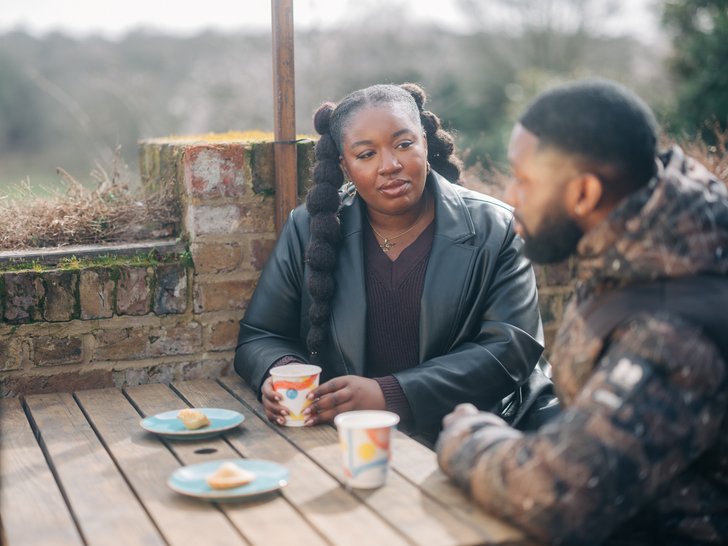
World Suicide Prevention Day
Join us on 10 September
On World Suicide Prevention Day, 10 September, you’re making sure the voices of people affected by suicide are heard.
Thanks to you, we work every day to answer more calls for help and encourage more people to reach out to us when they are struggling – day or night.
For World Suicide Prevention Day this year, we’ve joined forces with people who have experienced suicidal thoughts or lost loved ones to suicide.
We’ve made a new film together, emphasising that suicide is never inevitable – and showing how all of us can be there for others. And we’ve created new resources, to help people offer support and look after themselves during tough times.
People’s lived experiences guide everything we do at Samaritans. Like Amy, who worked with us on the film and resources, we believe this approach is vital.
“We are all able to work together in a unique way towards a common goal, it creates something new, something different. Something which can really make an impact. Something which we hope saves more lives.” – Amy
Watch our World Suicide Prevention Day film and download the resources here.
Follow Samaritans on social media to share all our World Suicide Prevention Day posts on 10 September
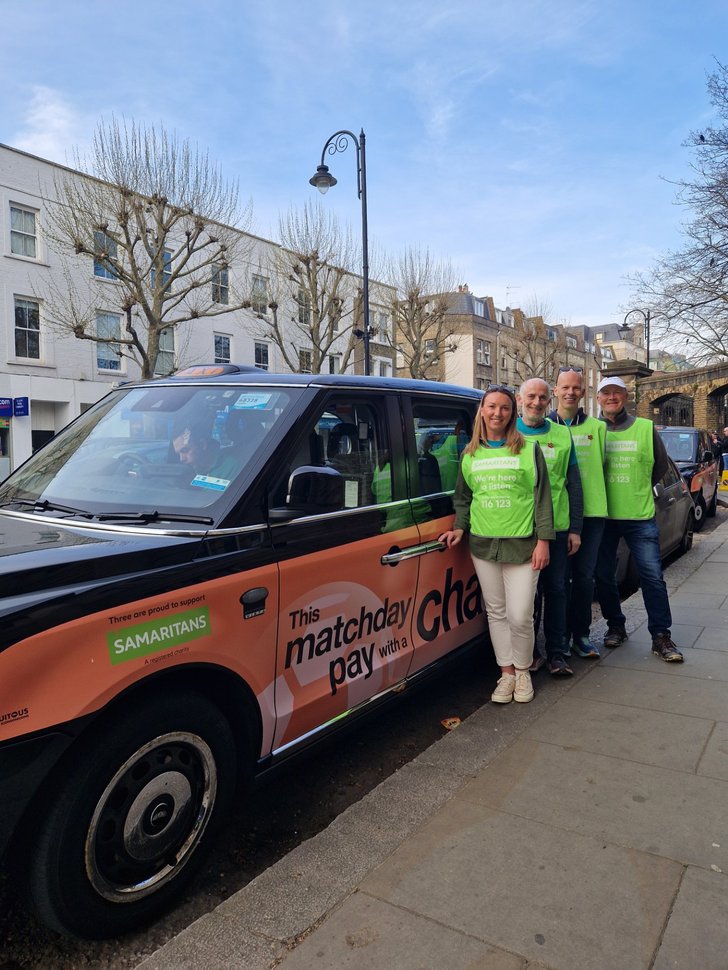
Talk More Taxis
The latest phase of #TalkMoreThanFootball
As part of the latest phase of our #TalkMoreThanFootball campaign with Three UK, we trained taxi drivers to help create a safe space for passengers to open up. The results will warm your heart.
The perfect match
New research from our partner Three UK revealed two-thirds of football fans struggle with their mental health. Research has also shown the anonymity of a taxi journey can help people open up. So we joined with taxi drivers to help fans discover the power of talking. What happened next was amazing. People talked about family relationships, serious illnesses, feelings of not wanting to be here anymore. One passenger looked surprised as he said:
“You’ve allowed me to talk about my emotions. That’s not something that usually happens.”
The video was seen by thousands of people on social media, helped by ex-England striker Peter Crouch and Samaritans ambassador Josh Cuthbert – who both spoke candidly about their experiences. We’d like to thank Peter, Josh, all the taxi drivers and Three UK for encouraging people to check in and open up. And we’d like to thank you – for helping Samaritans listen, whenever someone needs to talk.
“I’ve started using what I learned every day. It has helped open up those chats and made it easier to be there for each other. Just knowing I might brighten someone’s day by listening feels really good.” – Michael, taxi driver
Having a tough time? It can help to TALK.
If you find yourself struggling and want to tell someone, these simple tips can help.
T – Take your time
A – Ask for support
L – Let others help
K – Keep it real
Remember, we’re here for you too. Call Samaritans free, day or night, on 116 123.
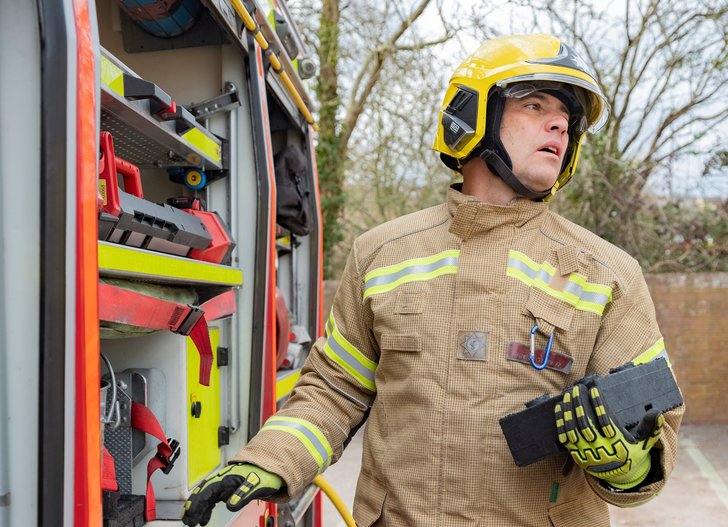
“Calling Samaritans was the best choice I could have made”
Tom's story
On the day Tom left his house thinking of ending his life, he made a call to Samaritans. This is the kind of life-saving difference you make every day.
“I’ve lived with depression and anxiety most of my adult life, and I don’t know if it’s connected to the fact I was managing undiagnosed ADHD. Over the years, I’ve had several mental health breakdowns. I’ve had thoughts like, ‘You don’t deserve your family. They’d be better off without you.’ All of those negative thoughts.
I ended up just taking my dog and heading for the woods in the middle of the night, battling with suicidal thoughts and struggling to cope with the feelings that were overwhelming me.
Crying my eyes out. Hundreds of voices going on in my head, telling me to just do everyone a favour and make everyone’s life easier by just disappearing forever. Then something in my head flashed up ‘Samaritans’.
I could remember the number and I just sat and called Samaritans. It was the best choice I could have made in that moment. I remember a very kind-sounding person at the other end of the phone who just grounded me. [I ended up] still upset but not wanting to take my own life anymore.
I realised it was making me worse, keeping stuff locked in. So I think that’s what drove me to become more open personally. I think some people see it as a weakness. I don’t see it that way. I see it as the opposite. I think it’s incredibly brave to open yourself up like that. If someone was feeling alone or in crisis and thinking about calling Samaritans, [I’d say] don’t think about it, just call them. They’re literally there just to support you.”
When people like Tom feel they’ve had enough, your support helps them go on. Give again so Samaritans can always be there.
Meet our volunteers
There’s definitely no such thing as a typical Samaritans volunteer. Thanks to your generosity, we train and support people from every walk of life. United by a shared belief in the power of listening, people like David and Qasim respond to a call for help every 10 seconds.
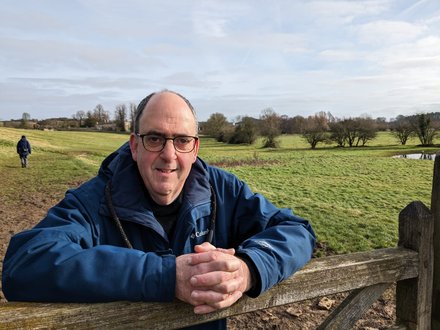

“I’ve noticed an incredible difference in how I communicate.”
Qasim’s story
"In 2016 I remember being in a really difficult situation. It was awful, and at the time felt everlasting. When I think about the future now, I can think about what my life is going to be like – where I’m going to live, what I’m going to do – but then I could not see anything, it was just black.
I don’t know where Samaritans number came from, but I called them. I’ll never forget that call. All I wanted was to sleep. The volunteer didn’t go into everything, like ‘Oh what’s happened?’, she really helped me. I actually fell asleep on the phone. I felt so much better, that was what I needed.
Years later, I remember wanting to give back. I’d just moved back from London and I just wanted to do something with my life, to help contribute to society. Samaritans popped into my head.
Doing the training and becoming a volunteer definitely strengthened my listening skills. You have to deal with tough situations. All that training helps you become an even better listener. What I’ve learnt, I take it home to be there for my family and friends. I’ve noticed an incredible difference in how I communicate and how I deal with certain situations, and how I support people.
During my first few shifts, I was really nervous. The change from training to talking to real people is a big step. The first time you hear someone, it’s like, ‘Wow, this is someone’s life, and my words could impact them’.
It is quite surreal at first, but the more you hear it the more you want to help.
The most rewarding aspect is being there for people and knowing, most of the time, that that person is feeling better. You’ve made them think in a different way."
Did you know?
In 2024, 23,000 people volunteered their time for Samaritans.
Could you be a Samaritans listening volunteer?
We’re always looking for more people like David and Qasim to listen with us, and we’ll give you all the training and support you need.

Supporting scriptwriters and journalists
The work of Samaritans' Media Advisory Service
Every year, our Media Advisory Service team works with a range of scriptwriters and journalists. It’s an important way to make sure stories involving mental health and suicide are accurate and responsible.
If you’re a fan of the soaps, there’s a good chance you’ve seen the work of Samaritans’ Media Advisory Service team – even if you didn’t know it.
Earlier this year, there was a storyline in EastEnders when one of Albert Square’s most famous characters – Phil Mitchell – made an attempt on his own life. Before any filming happened, the show’s producers got in touch with us, to make sure they were showing the storyline in an accurate, safe way.
And if you’re a Hollyoaks fan, you might have been following the story of Ro Hutchinson, played by actor Ava Webster. Ro experienced bullying, family problems and uncertainty over his gender identity.
In a special episode shown during Mental Health Awareness Week in May, Ro called a helpline, struggling with suicidal thoughts. To make sure the call seemed realistic and showed how talking can help, the Hollyoaks team contacted us, and we got our listening volunteers involved to share their insights. You could definitely see their influence when the episode hit our screens.
Why our Media Advisory Team matters
The Media Advisory Team’s name is actually slightly misleading, because they now work with a much wider range of people – including politicians, coroners, academics and other organisations who focus on mental health. Essentially, they’re here to help anyone who talks publicly about suicide to do so carefully and responsibly. The team’s work helps to reduce stigma around mental health and makes sure suicide isn’t romanticised. It can also prevent inaccurate information being broadcast that could lead to suicidal thoughts.
To help with this, we run training courses for journalists and journalism students. And we publish guidelines on a wide range of subjects, from reporting suicide to working with people who have lost loved ones to suicide. We’re determined to create a future where no one feels afraid to open up when they are struggling, and our Media Advisory Team plays a big part in making that happen.
“The Media Advisory team at Samaritans are an invaluable resource when it comes to thinking about the ways in which we approach storylines that tackle difficult subjects such as suicide. We’re incredibly grateful for their time, insights and research that help to ensure a responsible, accurate and compelling depiction that will not only start conversations at home, but educate and de-stigmatise.” - Vanessa Highet, Lime Pictures
With your support, we’ll take action in all kinds of ways to stop suicide today. Because tomorrow could be too late.
When people go missing, you’re there
Our partnership with Missing People
Did you know your support helps us partner with the charity Missing People to take action to stop suicide?
One in ten people who take their own lives in the UK have been reported missing first. By working with the charity Missing People – which reunites missing children and adults with their loved ones – we’re determined to reach more people at risk of suicide, before it’s too late.
The results of our partnership speak for themselves.
After someone is reported missing, the police work with Missing People, who send an SMS to the person, letting them know Samaritans will give them a call. One of our volunteers then phones them.
If the person answers, we listen like we always do. With compassion. And without advice or judgement.
In the last year we provided 1,191 missing people at risk of suicide an emotional support call through the partnership. This was a success rate of 28% – to a hard to reach, very vulnerable group.
There’s no doubt this approach works, but government funding for the service ended in March. It’s now fully funded by your support, and we can’t thank you enough for your generosity. Together, we’ll always be there for missing people.
More ways to get involved
Fundraise for Samaritans with our Dawn Walk or dog walking challenge
See you at sunrise?
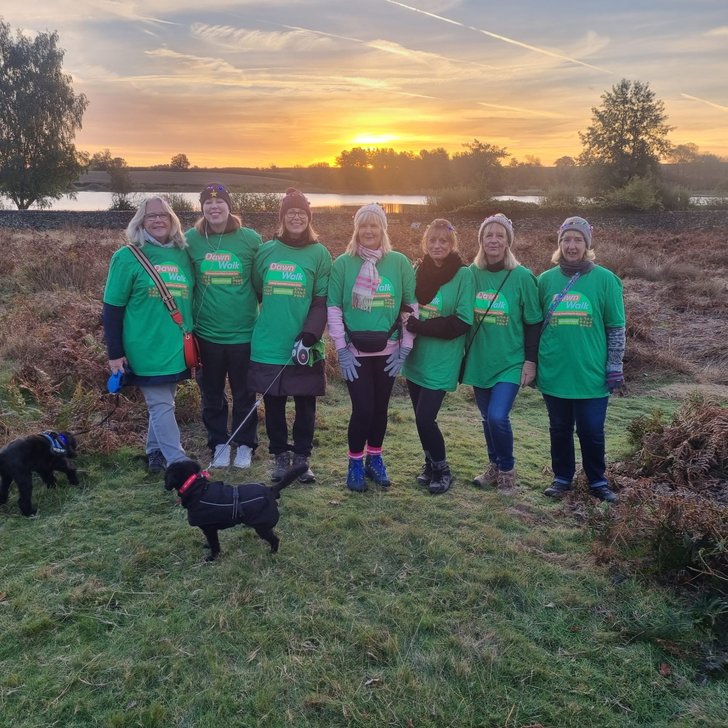
Join us for the 5km Dawn Walk on Friday 10 to Sunday 12 October and celebrate World Mental Health Day as the sun comes up.
You can take part wherever you choose, raising vital funds and walking in solidarity with people struggling to cope.
It’s a life-affirming experience. Find out more about Dawn Walk
Calling all dog owners!
It’s time to put your best paw forward as our 50-mile dog walking challenge returns this November. Will you commit to walk 50 miles during November to help Samaritans be here for more people as winter draws in? We’ll even send you a dog bandana and a beanie when you register!
“Joey has the most calming, gentle nature. He would make the best Samaritans volunteer.” - Izzy, a listening volunteer, took our dog walking challenge last year.
Share your thoughts. Shape our future.
Join the Samaritans Insight Panel and let us know what matters most to you.
We’re looking for supporters to help shape the future of Samaritans, by joining our online Insight Panel and sharing opinions on our work.
There’ll be quick and easy polls, questions, surveys and short discussions – and how often you get involved is totally up to you. We’d love for you to be part of it.