Priority 1: Access
Making sure we’re there, whenever and however someone reaches out to us.
Upgrading our helpline infrastructure
Our telephone system is fundamental to what we do at Samaritans. This year we completed a major transformation of our helpline technology, moving UK calls to a new digital platform that we call the Listening Centre. We committed £11.4m this year to drive progress in this priority area.
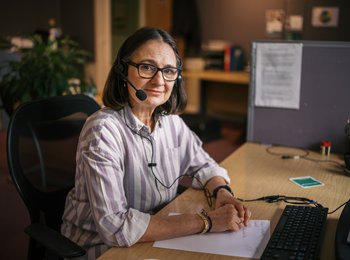
Mo, Samaritans volunteer in Oxford
Our top priority was keeping our 24/7 commitment to callers and we achieved this by phasing the switchover. The Listening Centre has not only futureproofed our service for years ahead; it has provided Samaritans volunteers with the tools they need to be there for every caller, including a simpler system for logging calls and making outbound support calls. With Samaritans Ireland due to join the platform in 2025/26, we still need your support to complete this vital programme.
Shaping the future of online chat
More and more people are using online chat as a way to seek help. We saw an 11 per cent increase in demand for our online chat service in 2024.
However, this service is still in its pilot phase, supported by 700 volunteers on six evenings a week. In 2024, we commissioned a detailed evaluation of the pilot so far, to help us build on what’s working and fix what’s not.
The evaluation involved focus groups with children, young people, adults and listening volunteers, including those who had already used the chat service and those who hadn’t.
The results were clear. Samaritans’ online chat is effective in reducing distress for both adults and children, and 94 per cent of those who left feedback after their experience said they would use the service again. There are also things we can improve on, such as expanding service hours, making it easier to use, cutting wait times and enhancing volunteer training.
We’re grateful to The Prudence Trust for funding the evaluation and to everyone who took part. Your insights are shaping the future of the service. With demand rising, we need continued support to grow online chat out of pilot phase and into a fully accessible, sustainable and high quality channel for Samaritans’ support.
Today I really couldn’t see a way out and I wanted to give up. [The volunteer] was so kind and listened, he made sure I knew that there is someone out there that cares.
Samaritans caller, Online Chat
Enhancing support for people in prison
People in prison are especially vulnerable to suicide and self-harm. Our work in prison settings is among our most challenging, and a critical part of Samaritans’ mission.
Through our Prison Listener scheme, people in prison trained by Samaritans provided support to their peers over 46,000 times in 2024, including 800 conversations about the emotional impact after a suicide. Alongside this, we worked with the prison service to foster a trauma-informed response after a person in prison takes their own life, ensuring that staff and prison Listeners can help to reduce further risk.
We relaunched our Prison Listener Core Training (LCT) with new topics and simplified language to meet the literacy needs of participants. We also replaced all the multimedia training resources in response to feedback that 9 in 10 trainees couldn’t use video or audio.
And we worked with the prison service to run a major research project into self harm in prison. We talked to prisoners affected to deepen our understanding of the challenges they face and what helps. The findings, which are available on our website, will help to inform decisions about improving prisoner support and shape our future work.
10 years of our free helpline in Ireland
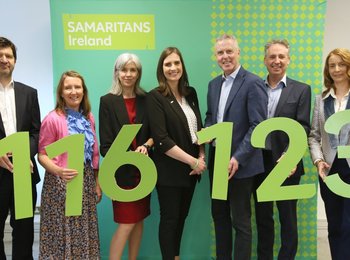
The service is made possible by a long standing partnership with Ireland’s telecoms providers who cover the cost of calls: BT Ireland, eir, Sky Ireland, Three Ireland, Virgin Media Ireland and Vodafone Ireland. Supported by Ibec’s Telecoms Industry Ireland group, the partnership has now been extended for another five years.
The generosity of our partners and supporters helps to ensure we can provide free support, day and night, for anyone struggling to cope in the UK and Ireland.