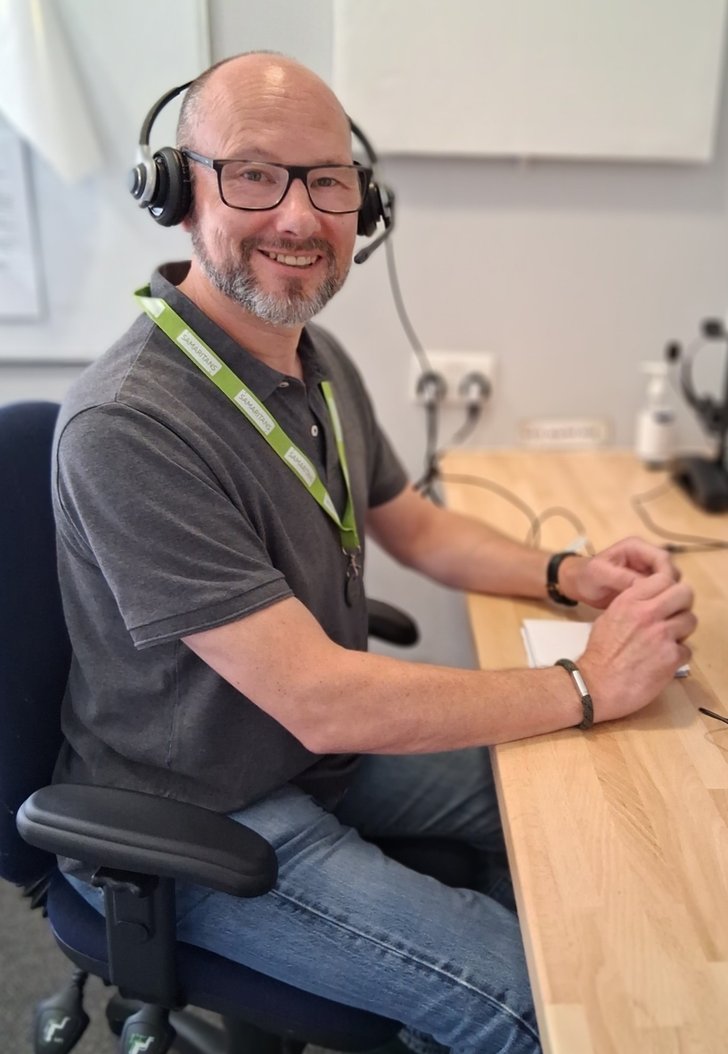
It’s the 24th July, also known as 24/7, or Samaritans Awareness Day. Samaritans listening volunteers are here to pick up calls from people in emotional crisis around the clock.
This year, on Samaritans Awareness Day, we’re going to introduce you to two incredible volunteers. Laura, in Shetland, and Doug, in Dundee.
Laura spoke to us about being a nighttime listening volunteer, whilst Doug told us about being a listening volunteer with Samaritans during the daylight hours.
Both Laura and Doug gave us an insight into their thoughts, feelings, and preparations before and after their listening shifts. They let us know what it’s really like being the voice behind the phone line, and often the only person that someone feels able to talk to during a time of crisis.
Doug's Story
Doug is a listening volunteer in Dundee, and mostly takes shifts through the day. Doug made the decision to become a listening volunteer after realising the impact that simply offering a listening ear to someone could have.
“The decision came from a combination of personal experiences. I began to realise how those going through challenging situations benefitted from having someone there to listen, without offering advice, and without making any judgements. Just someone who was able to ask the important questions that others may feel uncomfortable raising.”
Doug often volunteers for shifts during the day, fitting them in around work commitments.
“It is essential that Samaritans are available to take calls 24/7 because the need to talk is not limited to office hours or the middle of the night. All our volunteers at the Dundee Branch commit to a mixed diet of shifts. This usually comprises at least one overnight shift every month and the rest during daytime and evenings. "
“It is essential that Samaritans are available to take calls 24/7 because the need to talk is not limited to office hours or the middle of the night.
Doug
Preparing for a Shift
“Preparing for a day shift is all about making sure I arrive in good time and with a clear head. I will usually be coming from work and may be returning there again after my shift, so it is essential not to bring any stresses or demands into the duty room.
“A good routine is important. This means that at least an hour before my shift is due to start, I will get something to eat and prepare drinks to take to the branch.
“In the car, I’ll listen to the radio or a playlist and aim to get to the branch around fifteen minutes before the shift is due to start. This gives me time to catch-up with my shift partner and check-in with the leader. The important thing is to be relaxed, ready and able to give full attention to all callers. What happens in the next few hours is not about whatever is going on in our lives. Our focus must be on those who have contacted the service.”
Supporting Each Other
Similarly to Laura in Shetland and the other volunteers across Scotland, it’s important volunteers look after their own mental wellbeing as well as supporting the callers. Speaking through any feelings of upset or distress with the shift leader is highly important.
“Because of the nature of the work we do, we can be affected by the content of a call and so we must feel comfortable opening-up with colleagues about our own feelings. The support we provide for each other is incredibly valuable and appreciated. We really do look out for each other and in so doing, affirm the benefits of being able to talk in confidence.
“After a call, sometimes my shift partner and I will take the next call waiting, on other occasions, it is important to debrief to each other or the leader about the last call and how we are feeling. Maybe some fresh air is required. All this is to make sure we can give our next caller the focus and attention they should expect.
“What will never cease to inspire and amaze me is the bravery, sacrifice and resilience that so many of our callers exhibit through their words, but they don’t see it themselves. We hear of such horrific experiences, so much suffering in silence and also great joy. Offering callers the opportunity to share their stories anonymously and in confidence can provide great relief and it is a privilege to be trusted to share that time with them.
“I would urge anyone thinking about calling Samaritans to do so. No matter what you are going through, we are here to listen.”
“What will never cease to inspire and amaze me is the bravery, sacrifice and resilience that so many of our callers exhibit through their words, but they don’t see it themselves. Offering callers the opportunity to share their stories anonymously and in confidence can provide great relief and it is a privilege to be trusted to share that time with them.
Doug
What it Means to Listen
Sometimes, people need someone to talk to that isn’t a family member or a friend. Samaritans volunteers are here to fill that space, to listen to people in emotional crisis, who could be struggling with suicidal thoughts and feelings, to allow them to talk through what’s going on without judgement and without telling them what to do.
“Many people are surprised that we do not give advice. Calls are never about us; we do not judge, we are here to listen. It takes almost a year to train each listening volunteer, and then we undergo regular ongoing training and mentoring. All of this is designed to make sure we are best placed to support our callers no matter why or when they call 116 123.
“Since COVID we have recruited and trained many new volunteers of varying ages and backgrounds. They have quickly integrated into our strong cohort of experienced Samaritans. Each bringing their own personalities and reasons for being here and enriching our listening, outreach, prison, training, selection, and management teams. It is a lovely community of dedicated volunteers, and I am proud to be part of it."
Calls are never about us; we do not judge, we are here to listen. It takes almost a year to train each listening volunteer, and then we undergo regular ongoing training and mentoring. All of this is designed to make sure we are best placed to support our callers no matter why or when they call 116 123.
Doug
Listening well is a difficult skill to master. It's natural for many of us to try and help by giving advice, opinions, or relating someone else's story to ourselves. It's important that Samaritans volunteers listen well and provide space for the person in distress to talk through what's on their mind.
“When I did my first shift I was encouraged to trust in my training and listen to the caller. When mentoring a new Samaritan I recommend they take the same approach. Listen to the caller, it’s all about them.”
Every 10 seconds Samaritans listening volunteers across Scotland and the rest of the UK and Ireland answer a call for help. We are here 24 hours a day, 7 days a week. Human connection can save a life. Let’s prevent suicide today, because tomorrow’s too late. Donate now.