I was a victim of childhood trauma, which subsequently led to me developing problems with my mental health.
Given my religion and cultural background, I wasn’t able to talk about this – it just wasn’t considered something you do. I think this inability to process what I was dealing with had a massive influence on what happened to me several years later.
I completed my GCSEs and further education at college and went off to university, hoping that would be a way for me to escape my trauma. However, I got to my second year and couldn’t understand why I felt so low. Eventually, I went to the doctors and was diagnosed with PTSD. Initially I took medical leave and went on pilgrimage with my mum and brother. I thought this would help, and it did, but when I returned, I spiralled again and was in a really dark place. There were so many memories that I couldn’t process, and it felt like my life was turned upside down. In the end, I had to drop out of university.
Within my cultural community, there can be a lot of judgement and stigma attached to mental health. There was a belief that I had been possessed, as I wasn’t behaving normally. My mental health team had to firmly explain to my family that this wasn’t the case; I was experiencing the symptoms of PTSD. It was at this time that I felt really alone and tried to take my own life several times. From a Muslim perspective, it’s a sin to die by suicide, but even though my religion condemned it, that’s how I felt as a human being.
I always say, at that point, the world and everything in it could’ve been offered to me but it just wasn’t enough. I just couldn’t see past what I had to go through, and nobody seemed to understand why I wanted to take my own life when I was seemingly doing well and had loving people around me. But all I could see was darkness; there was no light and no hope.
Lifesaving call
I was back and forth to the doctors, and my medication was all over the place – I really couldn’t take any more. I have no idea where I got the number for Samaritans from, but one night when I couldn’t stop crying, I picked up the phone and dialled. I told the man everything that had happened to me. I kept asking if he understood what I meant. I wanted him to know that I wasn’t possessed. I probably sounded quite irate. I think I was manic at the time, with depressive elements. I just wanted to be heard. I had supressed all my feelings and what I had been through, but then it hit me like a ton of bricks.
I cried and cried, and he just listened to me. He didn’t judge. I’ll never know who that Samaritan was but that call saved my life. I had given up so many things by this point – all my dreams and goals. It just felt like nothing good in my life was ever going to happen. If he hadn’t listened that night, the only other solution I would’ve had was to take my life.
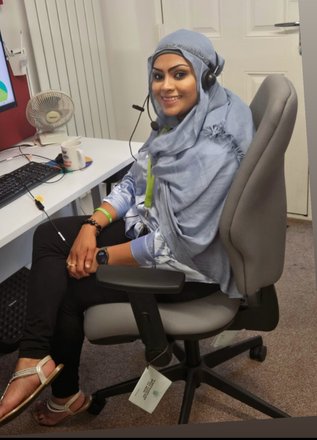
From that call, I started to build myself up again with counselling and support from the community mental health team. Here I am, many years later, having returned to my studies, become a mother – and I’m also now a volunteer myself. My dream had always been to finish university, but I had to drop out. Because of my own battles with mental health and wanting to help people, I have now gone back to university and studied psychology and counselling. I was going to do it part time but just threw myself in and have completed it in the three years. Now I’ve applied to study for a masters.
Fatemah
Becoming a Samaritan
I trained as a listening volunteer in 2021. The best thing is when my children say, “My mummy is a Samaritan – she’s always listening to people.” It makes me feel so proud. It’s nice for them to have that inspiration. But more than anything, and especially in the world we live in today, I want them to know how important it is to be kind. I took my children to a Samaritans open day and that was the first time they had seen the duty room. They said, “Is this where you sit and help people, mummy?” They say that they’re going to be Samaritans when they’re older. To get them talking and opening up, we play Samaritans at home, where we listen and try to help each other. I feel it’s given them a life skill.
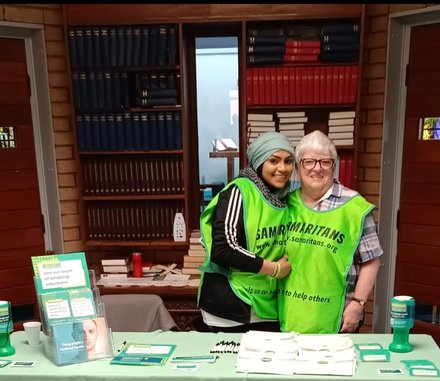
My main motivator for becoming a volunteer was that I didn’t ever want someone to end their life because they didn’t get the help they needed. Sometimes help doesn’t come physically, it comes from an ear and listening. That could be enough to save someone’s life, just giving them a safe space to speak.
Fatemah
Kindness makes the world go round – I always tell my kids that. I took a call from a man recently who was really struggling. I told him it was ok to feel the way he was feeling and that I had once called Samaritans. I wanted him to know I wasn’t reading from a script and that I had been where he was. I said to him, “I can promise you that Samaritans will be here and we’ll support you for as long as you need. We might not be able to fix it but we’re here to talk.”
The training was great and really gave me the opportunity to express myself. It helped me understand how to listen and made me realise that what I went through was because someone didn’t do that for me.
Whatever you go through in life, you should be able to talk about it, regardless of your background, religion or ethnicity. What matters is that you feel heard and you’re able to speak about things in a safe space, and I know Samaritans offers that. It doesn’t matter if you’re Muslim, Pakistani, Indian, Christian, Jewish, or practice Buddhism – culture and religion does not come into Samaritans.
I’m allowed to say how I feel and speak up about whatever I want to speak about. I can say, “I’m a Muslim, and I’m Asian, but I don’t want to live.” Instead of the response being, “You’re Muslim, You’re Asian, you can’t be saying that” it should be, “Why do you feel that way and how can we help?” We need to give that safe space to people and let them know it doesn’t matter where they come from and that they matter as a human being before anything else. There should never be any stigma attached to mental health, there should just be compassion and a listening ear.
Fatemah
Just as Samaritans supported me as a caller, they also continue to support me as a volunteer. I have been suffering from a physical health condition that took a long time to diagnose. During this time Samaritans helped me overcome my worries by taking the time to listen. I found it easier knowing that I can talk about how my anxiety and worries for the future heightened. It was not about how strong or happy I looked on the outside; I was not judged but instead supported.
